The Morning Star Is Now Available!

Showing posts with label books. Show all posts

Wednesday, December 8, 2021

Are You a Reader?


As you many of you may know, in my spare time, I write novels. This is the time of year for craft shows and festivals, and for the past few years, I’ve been attending several of them to sell my books. Unlike the many handcrafted items showcased at them such as floral arrangements, jewelry, or knitted or crocheted items, books aren’t as eye-catching a ware to sell. To generate interest, I’ve found it best to engage customers as they stroll by my display of novels by asking them a simple question: Are you a reader?

 So many books, so little time!

I usually get one of three answers: An enthusiastic, “Yes, I love to read!” Or an exasperated “I like to read, but I don’t have the time.” This is the answer usually given by a mom pushing a stroller, which is understandable as little ones require a lot of attention. The third answer is one I have trouble fathoming and that is the short reply, “I hate to read.” Some are apologetic when they admit that, appearing to be ashamed about their distaste for reading, while still others are shockingly proud of it. I’ve even had a few people tell me that they haven’t read a book since they left high school decades ago. 
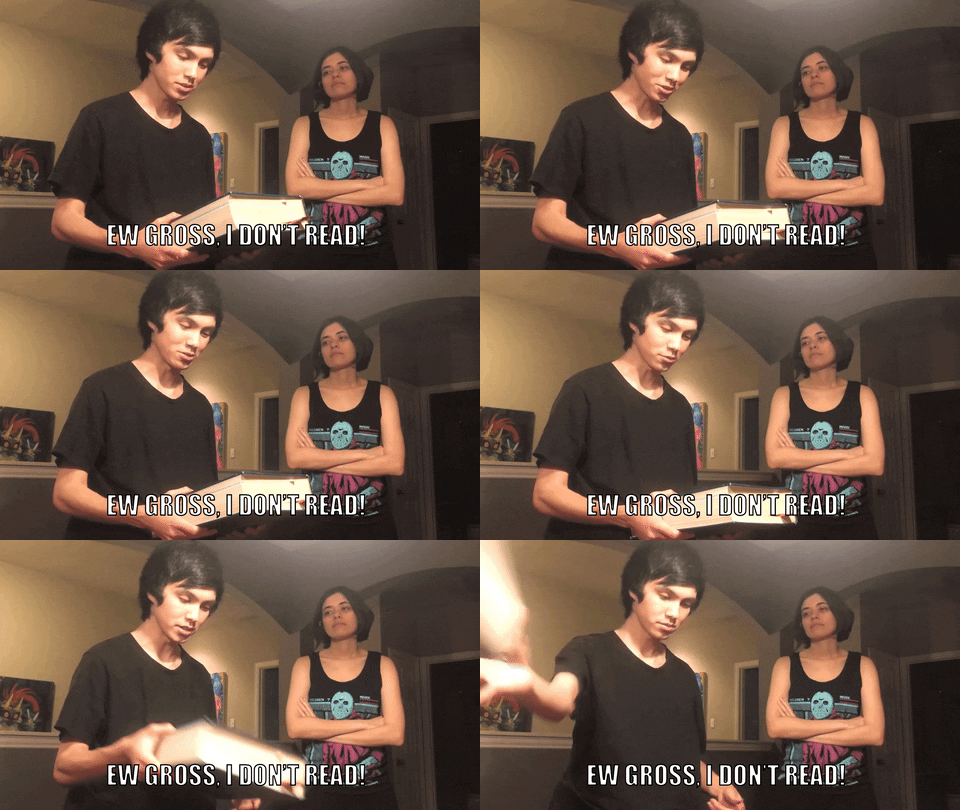


According to a 2021 Pew Research survey of U.S. adults, nearly a quarter of American say they haven’t read one book in the last year. I am not here to heap scorn on those who don’t read because I suspect somewhere during your formative years you may had difficulty reading or was forced to read books you didn’t like making reading a chore. I understand that; reading is an acquired skill and unless you have a learning disability, the more you do it, the easier it becomes. Also, I understand being forced to read boring books. I had to read Heart of Darkness in high school, and even though I loved reading, I found that book insufferably boring.
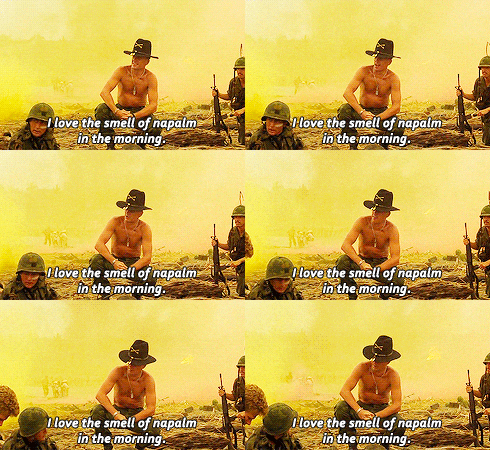

 Apocalypse Now based on the book Heart of Darkness. 

But reading for pleasure is vastly different from reading for a grade, and if you count yourself among the non-readers, I encourage you to try reading again. Here are a few benefits that reading provides to convince you. It stimulates your brain, and some studies even indicate that it may help to stave of dementia. It increases your knowledge. It keeps you from being bored. It stimulates the imagination. It allows you to travel to other times and places and enables you to experience things you could never outside of a book. Reading reduces stress as it can take your mind off problems. It is entertaining and is one of the most affordable forms of entertainment. For $25 or less, you can be entertained for hours. It can be free (if you go to your library). Reading is a great conversation starter. Readers love to talk about books. Reading binds people together. Readers love to connect. One of the most encouraging things I’ve learned while selling my books is that book clubs are still flourishing. After all these months of isolation joining or being in a book club is a great way to socialize. 


As we approach the holiday season, now is the ideal time to give reading a go again. I once saw that the best Christmas list is one that includes something you want, something you need, something to wear and something to read. Ask a bookworm for a recommendation for a good book they loved and then ask Santa to bring you it. Then for January, the time of the year when we make resolutions, commit to reading. You will be holed up for the winter, which makes it a great time to dive into a good book.

Reading is also a habit, albeit a pleasurable one. Start with reading a page a day. I guarantee you’ll be happy you did. 

This article originally appeared in the December issue of Northern Connection magazine.

Friday, August 9, 2019

We Could Be Heroes


I’ve been to Phipps Conservatory numerous times, but something that happened there this past Christmas has stuck in my mind. Visitors to the Holiday Magic winter flower show had the option of purchasing special hologram glasses to view snowflakes in their LED light displays. Always one to want to get the most from an experience, I bought a pair. 


As my husband and I stood in front of the Sunken Garden, I donned my glasses, which looked like the kind you get when you take in a 3-D movie. When I did, the little boy in his dad’s arms next to me, pointed at me and said with great awe, “Look, Daddy. She’s a superhero!” His dad and I both laughed, but his pure faith in me touched my heart and, of course, got me to thinking.

Too often today, we look to unmask and tear down heroes. It seems everyday we hear disturbing things about people who were once revered—from Martin Luther King to the Founding Fathers--no one is safe from the iconoclasts of our day who delight in diminishing people. While I am not naïve and condone bad behavior, I know that no one is all pure and holy. We are all a mixed bag, to one degree or another, of vice and virtue, but I think today too much emphasis is placed on bringing people down and not on building them up.  

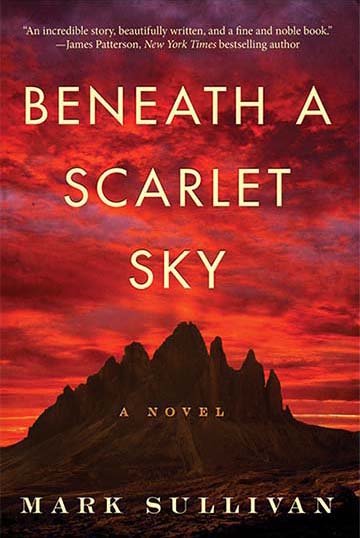
For instance, I recently finished the amazing book Beneath a Scarlet Sky, which is the true story of Pino Lella, an Italian teen in World War II Italy, who aids in leading Jews to safety over the Alps and then goes on to become a spy for the Allies after being forced to serve as a driver for the Nazi General Hans Leyer. Why are we just learning his story now?

 Beneath a Scarlet Sky by Mark Sullivan

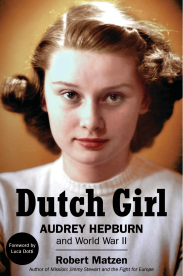
I haven’t read it yet, but Dutch Girl is on my to-be-read list. Twenty-five years after her death, this book details how beautiful actress Audrey Hepburn, while also a teen, participated in the Dutch Resistance during World War II. The recent 75th Anniversary of the D-Day Invasion unearthed numerous untold stories of heroism during that battle. 


Why did it take so long to learn them? One reason is that true heroes don’t boast; they let their deeds speak for themselves. Another reason is that most heroes don’t think they did anything extraordinary. Yet, these gems of heroic deeds elevate all of us.

Perhaps we may all be better for it if we, like that little boy at Phipps, concentrated on seeing in people their heroic qualities. After all, we usually rise to the expectations others have of us. I know after that little boy called me a superhero, I felt like I could leap a tall building in a single bound.


Image result for free image of george reeves superman


This originally appeared in the August 2019 issue of Northern Connection magazine.  

Friday, April 12, 2019

Where Was I . . . Sing, Sing a Song!


My husband received the book, Thanks A lot Mr. Kibblewhite, the Roger Daltrey biography, for Christmas, and I promptly snatched it and read it. Daltrey, if you don’t know, is the lead singer of The Who, arguably one of the best rock groups of all time, up there with the likes of the Beatles, The Rolling Stones and Led Zeppelin. One of the things that stood out in this book for me was how Daltrey said that the happiest time in his life was when he was working as a teen as a “tea boy,” a kind of “gofer” in an asbestos shed. Even though the job was tedious he recounts:

“We sang all day, every day. We used to drive the guv’nor mad. He wouldn’t let us have a radio, and I’m glad he didn’t because then we wouldn’t have sung. I can’t tell you what a difference that made.”

He goes onto say that one of the tragedies of modern life is that no one sings together anymore:

“In those days, everyone did. You’d be walking down the road and people would be singing on buildings sites, at roadworks, in garages, everywhere. When you’re singing, you’re happy. Singing changes your brain. It reduces cortisol and increases the release of endorphins and oxytocin. Some people have to take drugs to do that.”


Something as simple as singing collectively stands out as the happiest time in his life for a man who is a rock god and has performed for million and has earned millions along the way. But I believe him.
I thought it was very corny when I was a kid, and we’d be at my Grandma’s on Sunday night and Sing Along With Mitch came on television and my grandma, parents, uncles and aunts would sing along to the bouncing ball to songs like By the Light of the Silvery Moon, You Are My Sunshine and Show Me the Way to Go Home. But now as I look back on it, what a marvelous thing that was. Unlike Karaoke, where only one person is the star, everyone joined in together, and it gave us a collective culture. I learned songs that I doubt my children know. (Although my granddaughter demands that You Are My Sunshine be sung before her bedtime!)

I’ve found as I’ve traveled that singing cultures seem to know how to enjoy life more. When we went to Hawaii in the 1980s, we were made to sing all the time to songs like the Huke Lau, Don Ho’s classic Tiny Bubbles and the Hawaiian Wedding Song. In Italy, the Italians entertained us with opera and made us chime in with That’s Amore and Funiculi Funicula. In Ireland, they love to sing in the pubs and on tour buses, and a trip there is not complete if you haven’t sung along to Danny Boy, Galway Bay, or Tura Lura Lura.  

As much as I despised Mitch Miller back in the ‘60s, I realized that I learned a lot of those sing-along songs from that show. With so much division, stress and hate in the world, maybe it’s time we start singing together again. It’s good for the attitude, it’s good for your health, and it’s good for society. 

This article originally appeared in the April 2019 issue of Northern Connection magazine.